
Advancing Our Zero Harm Commitment
Operational excellence starts with safety. We integrate Global safety standards, technology-driven monitoring, and workforce engagement to drive zero harm safety culture across all our operations.

Key Linkages
Material Topics
Strategic Priorities
Key Risks and Opportunities
SDGs

Capitals Impacted


We integrate global safety standards, technology-driven monitoring and workforce engagement to build a zero-harm work environment across our operations.
Key Highlights for FY 2025-26
safety training hours in FY 2025-26
employee fatalities in FY 2025-26
employee trained on health and safety measures in FY 2025-26
reduction in employee LTIFR in FY 2025-26
Building a Zero Harm Culture
Our people are the most valuable resource, and we put them at the centre of everything we do. At AGEL, we embrace safety as a core business value that guides our everyday decisions for safer operations. Our safety commitment is led from the front by the leadership team, reinforced by robust policies and best-in-class safety procedures.
ISO 45001:2018 Certified
Occupational Health and Safety Management Systems
✓ All operational locations covered✓ Zero non-conformities for FY 2025-26✓ 100% operations assessed
Our Safety Architecture
Our Safety Management System is built on a strong policy commitment and comprehensive procedures, ensuring the highest standards of safety and regulatory compliance across all operations.
Zero Harm and Zero Leak
Adani Occupational Health and Safety Policy
Visible Leadership | 10 Commandments | Life-Saving Safety Rules
Identification and control of risks through structured verification and continuous monitoring
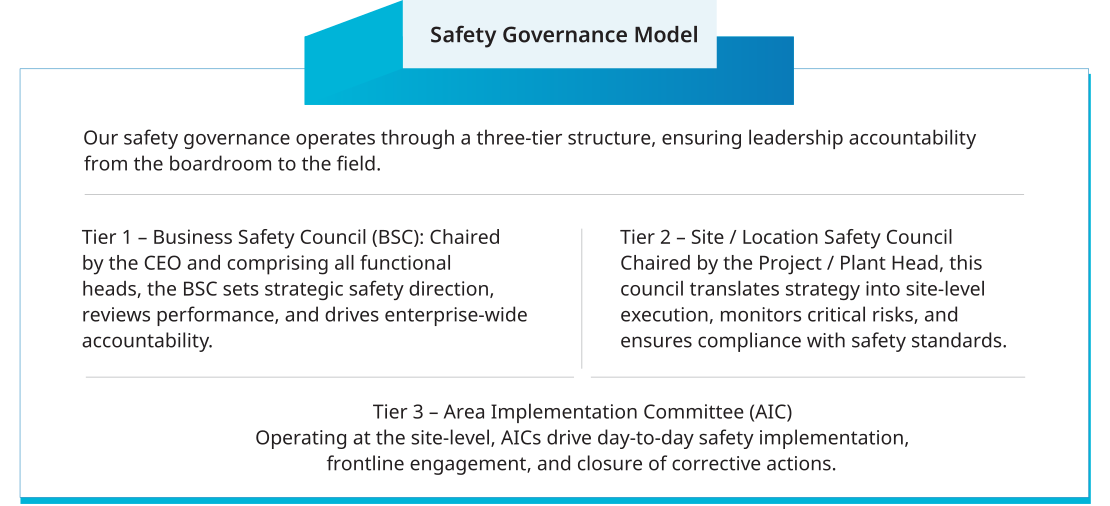
Safety Governance Model
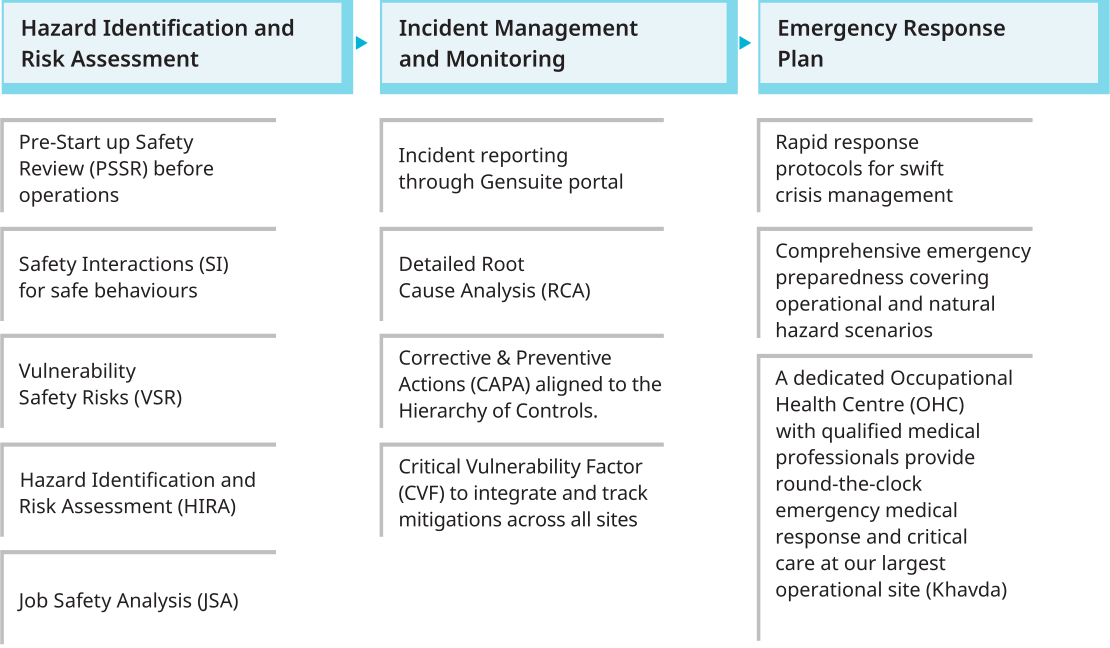
Integrated Safety Framework
Our integrated safety framework is built on a rigorous, assurance-based approach to hazard identification and risk assessment. This enables us to proactively identify vulnerabilities, prevent incidents, and protect lives across all our operations
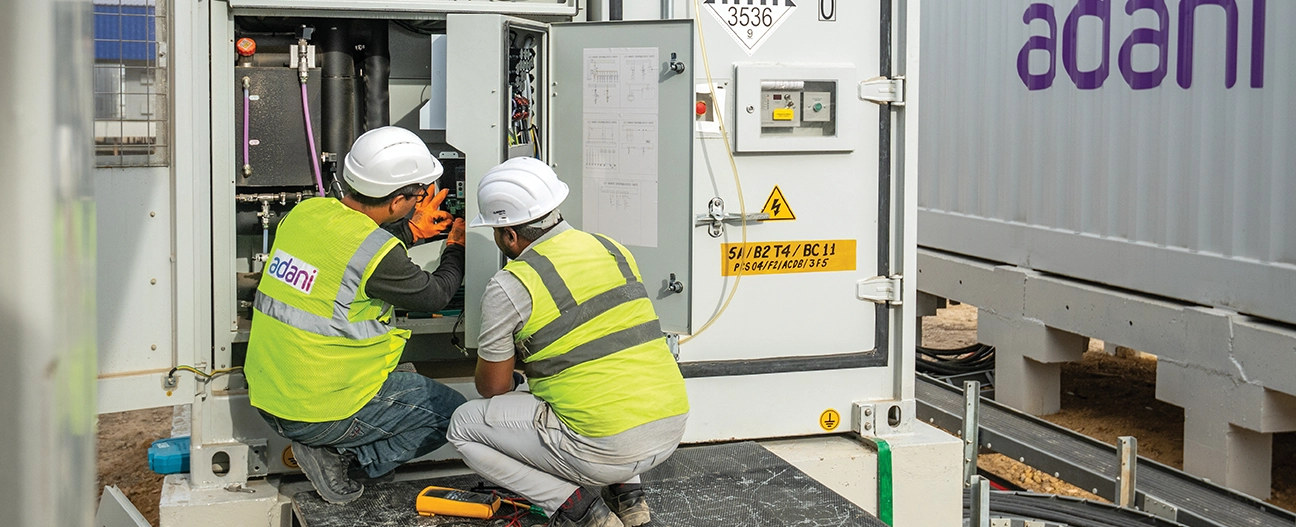 Khavda, Gujarat
Safety Across the Value Chain
Our Health and Safety Management System extends beyond the operations and provides safe working environments to all third parties. Our key initiatives for contractors’ safety include:
- Safety, as a criterion, embedded into procurement and contracts
- Stringent Contractor Safety Management (CSM) standards across operations
- Specialised training for capacity building for contractual workforce
- ‘SAKSHAM’, a dedicated program to strengthen contractors’ safety competencies
A-grade contractors covered under Supervisory Competency Assessment
Key Safety Initiatives
We use our “Safety on Wheels” initiative and VR-based training modules to build safety competencies and skills for the workforce at all levels. Additionally, we have implemented targeted initiatives to strengthen our safety ecosystem, which include:
- Adani Assessment and Induction Centre (AIC) at Khavda was expanded to accommodate the growing workforce, enabling effective safety induction and acrophobia assessment for worker deployed at height.
- Driver simulation centre has been developed at Khavda site to assess safe driving skills before onboarding, ensuring only competent drivers operate on-site
- Comprehensive traffic safety interventions including speed barriers, traffic signages, and proactive deployment of traffic marshals across key routes, and an AI-integrated CCTV system is currently being piloted to detect and capture driver safety violations in real time, enabling scalable and technology-driven traffic monitoring.
- Road Safety Week/Month campaign (January 2026), a large-scale awareness drive conducted across all project and O&M sites, featuring road safety skits, traffic safety quizzes, RVDTS training programmes, installation of reflective strips on vehicles, and eye & ear check-up camps for drivers
- Learning from Incidents through Horizontal deployment of lessons learnt in place for cascading learnings from CAT#5 severe incidents across all Business Units and Group operations, ensuring systemic risk reduction
- Advanced Life support (ALS) Ambulance along with trained paramedics is deployed at all project sites to provide effective emergency support and prompt medical attention
Safety Performance in FY 2025-26
| Safety Indicators | FY24 | FY25 | FY26 |
|---|---|---|---|
| Employee Fatality Rate | 0 | 0.07 | 0.00 |
| Employee Lost Time Injury Frequency Rate (LTIFR) | 0.40 | 0.33# | 0.24 |
# The LTIFR for FY 2024-25 has been restated from 0.07 to 0.33 for employees, reflecting a change in the calculation methodology. The revised approach aligns with the SEBI BRSR Guidance Note (Annexure II, Principle 3, Question 11) and applies a multiplier of 10,00,000 instead of 2,00,000 used in the previous year. There is no change in the number of reported lost time injuries or actual man-hours worked for the LTIFR calculation for FY 2024-25.
Read more under BRSR-Principle 3 Bhimsar, Rajasthan