
Strengthening Supply Chain Excellence
Our procurement approach integrates ESG principles, strong governance and supplier collaboration to promote ethical sourcing, environmental responsiveness, and long-term supply chain resilience.

Key Linkages
Material Topics
Strategic Priorities
Key Risks and Opportunities
SDGs

Capitals Impacted


Suppliers’ ESG performance is integrated into our procurement decisions, guiding supplier selection and engagement.
Key Highlights for FY 2025-26
Total suppliers with 17 critical and important manufacturing suppliers
of our Critical & Important manufacturing suppliers engaged in ESG Capacity Building Programs
ESG-Led Procurement Strategy
We place sustainability at the heart of our procurement strategy. We prioritise partnering with suppliers who align with our ethical, social and environmental standards. Suppliers’ ESG performance is integrated into our procurement decisions, guiding supplier selection and engagement. With strategic oversight from the Board and leadership guidance from the CEO and the CSO, our supplier ESG programme drives responsible practices across the value chain. We are also promoting the use of eco-friendly materials and embracing technology-led solutions to strengthen logistics safety and reduce the carbon footprint of our value chain.

Our Supplier Code of Conduct articulates the expected standards on ethical business, human rights and environmental stewardship, that our suppliers must strictly comply with.
Supplier Screening
- ESG screening/evaluation during onboarding of new suppliers and throughout supplier engagement using comprehensive ESG criteria
- Evaluation of country-specific, commodity-specific, sector-specific and ESG risks
New suppliers were screened on ESG criteria during onboarding process
Supplier Assessment
- Comprehensive desk reviews and onsite assessments to evaluate ESG performance and compliance with our standards
- Assessments by internal teams and independent third-party reviews
- Identification of improvement areas and corrective action plans with implementation support
of our critical and important manufacturing suppliers are evaluated for environmental, social and governance criteria
suppliers identified to have actual or potential negative impacts, and all suppliers are supported in corrective action plan implementation
Supplier Engagement and Development
We engage suppliers through GHG Supplier Engagement Program, enabling them to track and reduce value chain emissions. Capacity building workshops empower the suppliers to meet ESG expectations, including the training on:
- Health and safety practices
- Human rights and working conditions
- ESG policies and Supplier Code of Conduct
- Environmental and climate management
- Responsible sourcing practices
ESG Risk Screening Criteria
- Environmental Policies
- Environment Management System
- Compliance to Laws and Regulations
- GHG Emissions Management
- GHG Reduction Targets
- Water Management
- Lifecycle Assessment
- Consumption of Renewable Energy
- Adoption of Circular Economy
- Waste Management Practices
- Biodiversity Management
- Adoption of ISO 14001 and 45001 certifications
- Policies on Health and Safety
- Policies on Human Rights and related commitments
- Commitments to non-discrimination and harassment
- Compliance to Laws and Regulations
- Human Rights Assessments
- Internal and External Audits and Assessments on Human Rights Policies and Processes
- Collective Bargaining Agreements
- Grievance Redressal Mechanism
- Prohibition of Child Labour
- Prohibition of Forced Labour
- Policies on Corruption, Bribery, Code of Conduct, and Ethics
- Adoption of Digital Tools and Performance Tracking for KPIs
- Compliance to Laws and Regulations
- Trainings on ESG criterion
Supply Chain Risk Management
Supply Chain risk management is critical to organisation’s material and financial impact. Our structured risk assessment framework help address supply chain related risks, such as environmental and human rights violations including child/forced labour, operational discontinuity, regulatory non-compliances, etc. The assessment outcomes inform the mitigation plans, regularly reviewed by the Supply Chain Risk Assessment Committee against the defined roadmap and key performance indicators.
of our critical & important manufacturing suppliers are assessed for risks
critical and important manufacturing suppliers have corrective action or improvement plans in place, for all actual/potential negative impacts if and as they arise.
Sustainable Logistics
Key Initiatives
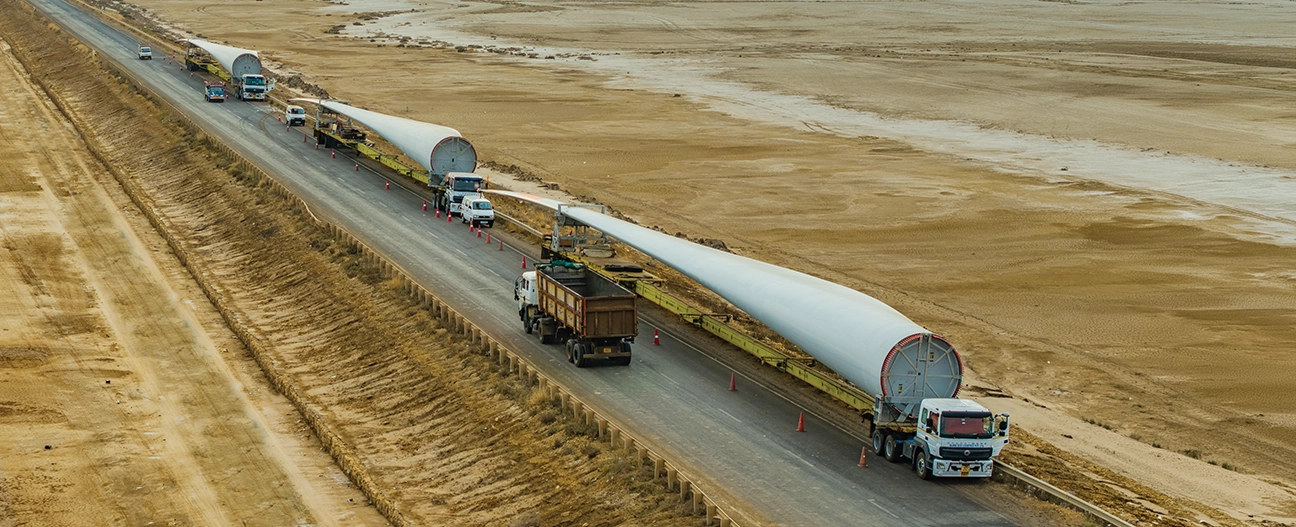
- Regular audits of logistics partners on efficiency, safety, and environmental impact
- Automated Logistics Management System (LMS) to monitor truck logistics, identify violations and take corrective measures
- Tracking idle engines through LMS to reduce fuel wastage
- Collaborating with logistics providers adopting cleaner fuels such as green ammonia
- Evaluating feasibility of Electric Vehicles (EVs) to support sustainable logistics operations
Building Resilient Ecosystems through Partnership and Shared Growth
At AGEL, our supply chain is a critical enabler of India’s clean energy transition and inclusive socio-economic development. Our diverse supplier ecosystem comprises large enterprises, MSMEs, contractors, transporters, and service providers spread across urban, semi-urban, and aspirational geographies. Our engagement approach focuses on long-term, shared value partnerships that strengthen economic opportunities and India’s sustainable growth trajectory.
Local Enterprise Integration and Grassroots Impacts
Many of our assets and projects are located in tribal districts, emerging industrial clusters, and remote geographies. By integrating local suppliers and service providers into our supply chain, we contribute to grassroots enterprise development, livelihood creation, and regional economic resilience. As local businesses scale alongside our projects, they strengthen local economies, enhance capabilities, and improve financial stability for communities.
Financial Enablement of Suppliers
AGEL strengthens supplier access to affordable and timely finance through vendor financing and invoice discounting mechanisms. These are enabled through digital platforms such as M1 Exchange and RXIL and partnerships with leading financial institutions including State Bank of India, HDFC Bank, and Union Bank. These initiatives have significantly improved suppliers’ access to working capital and reduced their cost of funds. This model has delivered tangible benefits, including interest cost savings that enables suppliers – particularly MSMEs to improve cash flows, invest in capacity expansion, and enhance operational resilience.
Responsible and Transparent Supplier Governance
Our supplier governance framework promotes ethical conduct, safe working conditions, environmental stewardship, and compliance across the supply chain. Through a Supplier Code of Conduct, ESG-based screening for new suppliers, periodic assessments of existing suppliers, and focused capacity-building initiatives, we drive supplier improvements, strengthen shared risk management and support suppliers in their sustainability transition journeys.
of procurement is sourced from local enterprises, supporting sustained income generation and indirect employment across logistics, construction, and ancillary services.
In FY 2025-26 AGEL facilitated an annual vendor-financing turnover
 Khavda, Gujarat