
Safeguarding Value Through Robust Governance
We remain committed to conducting our business operations with transparency, ethics and integrity. Guided by a strong tone from the top, our Board sets the culture of responsible governance. This is supported by comprehensive statutory and compliance policies, robust risk management, audits and assurance processes, enabling responsible growth, innovation and long-term value.

Key Linkages
Material Topics
Strategic Priorities
Key Risks and Opportunities
SDGs

Capitals Impacted


At Adani, governance underpins long-term value creation. As we scale, amid heightened stakeholder expectations, we remain committed to integrity, transparency, and accountability.
Governance Practices-in-Action at the Adani Portfolio of Companies
- Family office has transitioned from a promoter-led structure to a professionally-managed institution by filling key leadership roles in each entity with domain experts in investment strategy, legal & compliance, risk management, treasury and governance
- Strengthened Board charter and relevant committee structures, maintaining independence on critical matters
- Adopted a formal operating model, including investment and risk committees with defined mandates, performance-linked evaluation metrics and periodic independent audits and reviews to monitor compliance with the SOPs and policies
- Initiated and disclosed the tax transparency audit across all portfolio companies
- Established a structured succession planning for seamless intergenerational governance
- Clear philanthropic goals and ESG-aligned investment strategies, with a separate team to evaluate ESG risks and opportunities, monitor and disclose performance through annual Integrated Reports, and/or ESG Reports
- Adopted and implemented secure digital platforms, AI-driven analytics and cybersecurity protocols for robust data governance
- Issue regular compendiums to transparently disclose our performance, credit and governance landscape, available on AGEL’s website
Planned Initiatives to Strengthen Governance
Based on its strategic roadmap, the Adani Portfolio of Companies are currently in the process of formalising key initiatives and integrating strengthened assurance practices. The transition to the new framework is expected to be adopted within a three to five years horizon. These measures are planned to further enhance governance standards, and provide stakeholders with continued confidence in our stability, transparency, and resilience of both the family office and holding company structures within the Adani Portfolio.
Focus Areas
of violation of Code of Conduct, including bribery and corruption, anti-competitive practices and conflicts of interest
of breach of information security and loss of customer data
Board of Directors, Key Management Personnel and Employees trained on Code of Conduct
Board of Directors trained on ESG topics during the year
Governance Architecture
Our governance framework is built on the principles of transparency, independence and accountability that creates a strong assurance structure for proactive engagement with both internal and external stakeholders. A clearly-defined governance architecture strengthens oversight and investment discipline, supporting well-informed and balanced decision-making. This structure reinforces impartial governance, best-in-class Board practices and focused deliberations on matters of strategic importance.
Three Pillars of Our Governance Architecture
- Codified roles, responsibilities, and delegation of authority across family members, the family office team, and operating company boards
- Distinct separation between promoter family governance and listed company governance to avoid overlaps and ensure compliance
- Appointed external professionals with expertise in governance, finance, and risk to provide non-binding but rigorous advisory oversight
- Quarterly meetings to review investment decisions, risk management practices, and capital allocation
- Family office investment decisions routed through an IC with structured evaluation and approval thresholds
- Adoption of a formalised investment policy framework for new opportunities, ensuring alignment with risk appetite and strategic direction
Governance Snapshot
(As of March 31, 2026)
Board type: One Tier
Total Board Size: 10
Independent Directors
Executive Directors
Non-Executive (Promoter) Directors
Nominee Director
Statutory and non-statutory committees comprising only Independent Directors
Statutory and non-statutory committees chaired by Independent Directors
Led by the Independent Corporate Responsibility Committee (CRC)
Meetings held
Board attendance (minimum requirement: 75%)
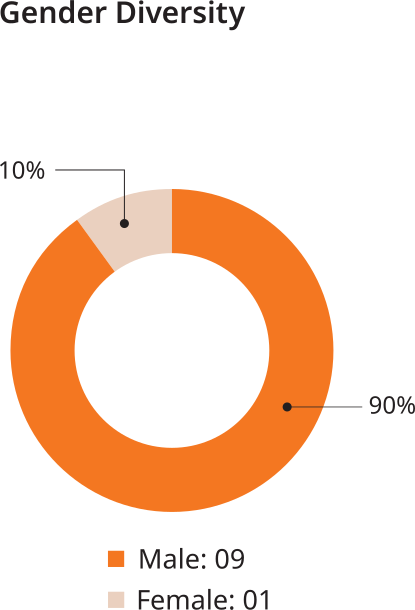
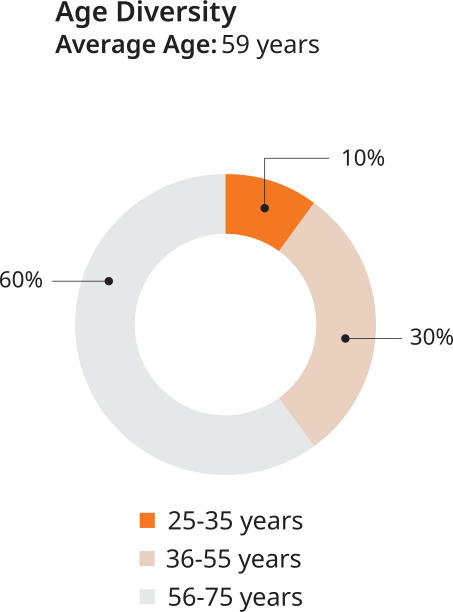
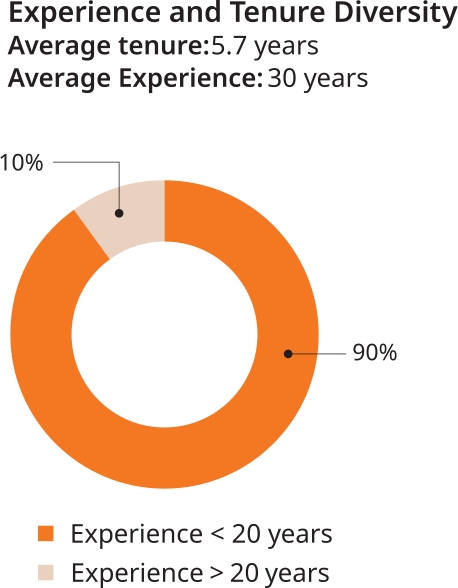
The Board and Its Committees
Board’s Statutory Committees
- Audit Committee
- Nomination and Remuneration Committee
- CSR Committee
- Stakeholders Relationship Committee
- Risk Management Committee
Board’s Non-Statutory Committees
- Corporate Responsibility Committee (ESG Committee)
- Information Technology and Data Security (IT&DS) Committee
- Merger and Acquisition Committee (Sub-Committee of Risk Management Committee)
- Legal, Regulatory and Tax Committee (Sub-Committee of Risk Management Committee)
- Reputational Risk Committee (Sub-Committee of Risk Management Committee)
The Board
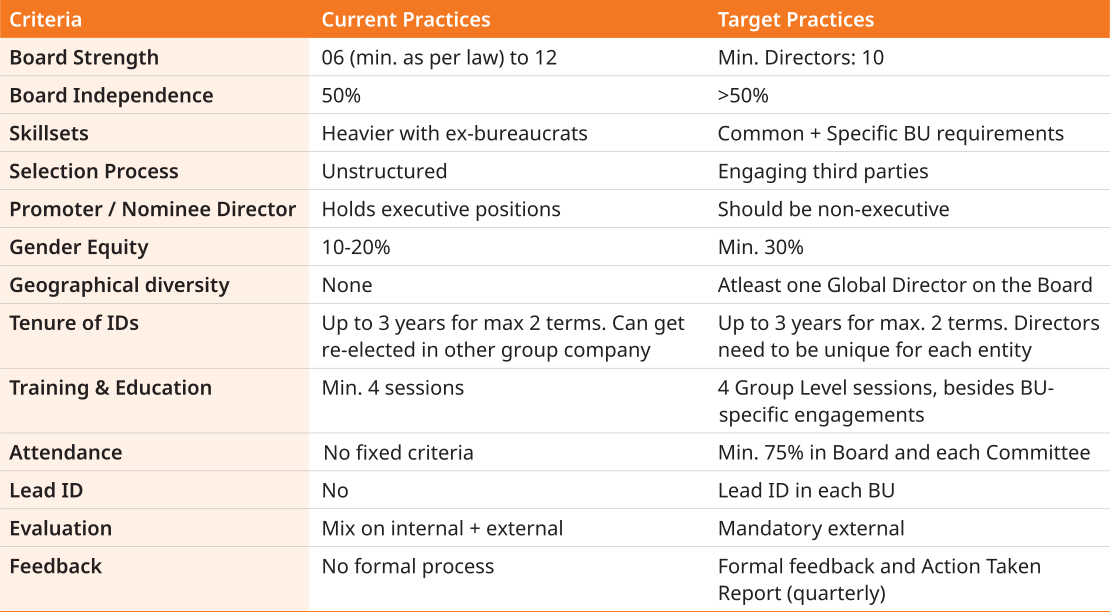
The Governance Charter at the Adani Portfolio of Entities is operationalised through a well-structured and independent Board. The Board comprises 50% independent directors, and balance nominee directors, which includes senior management such as professional Managing Directors and CEOs. This balanced composition ensures a diversity of perspectives and extensive expertise from global leaders and accomplished professionals at the highest level across various governance domains.
Board Committees
The Board has formalised committees and sub-committees (which includes business-specific committees) to operationalise its Governance Charter and conduct. Each Board committee is formed based on identified governance, investment, or risk oversight requirements, with clearly-defined scope, mandate and objectives. These committees operate under formal charter, outlining their roles and responsibilities, terms of reference, decision-making authority, escalation matrix, meeting frequency and quorum requirements. In addition, AGEL’s Board has formalised five additional business-specific committees for added assurance and oversight.
Click to read more about the Board Committee Charters on our website
There has been continued focus on having full independence on certain critical matters through independent directors only representing these committees or in the remaining of the cases, the independent directors chairing the committees to keep the discussions at the committees independent.
Related Party Transactions (RPT)
Acknowledging the inter-connectedness of various Adani portfolio entities and their strategic reliance on each other to promote circular economy and economies of scale, we have adopted a robust governance framework to undertake certain transactions that are in the nature of related party transactions (RPT). This framework comprises a clear policy framework, independent reviews, internal & external third-party audits and compliance oversight mechanisms to provide assurance to the stakeholders.
Compliance and Ethical Governance
We have established a framework of statutory and compliance policies, with procedures to ensure consistent implementation, continuous monitoring and periodic audits across all business operations. This framework embeds integrity into decision-making and establishes a culture of accountability across the organisation and the value chain.
Code of Conduct
Articulates Group’s ethical standards, values, and commitment to integrity, anti-corruption practices and responsible business practices. The Code is periodically reviewed and reinforced through leadership communication and structured training programs.
Insider Trading Policy
Prohibits trading in securities based on unpublished price-sensitive information. The policy applies uniformly to all employees and designated persons, regardless of role or seniority.
Whistleblower Policy
Extends a secure and confidential mechanism for reporting unethical conduct or violations. It ensures anonymity, safeguards against retaliation, and is actively communicated to encourage responsible disclosures.

Zero Tolerance Approach to Corruption
The Adani Portfolio companies uphold strict zero-tolerance approach toward corruption. Mandatory training programs on the Code of Conduct, Integrity, Human Rights and Equality, Anti-Corruption, and Anti-Bribery policies are conducted to enhance compliance. All employees and contractors are required to annually refresh and reaffirm their understanding and adherence to these principles. Any violation is addressed with strict disciplinary action in accordance with established protocols. Compliance updates are periodically reviewed by the Corporate Responsibility Committee of the Board and publicly disclosed through the annual ESG reports.
Click to read more about our governance and sustainability policies on our websiteAnnual Anti-Corruption Statement
All employees mandatorily complete anti-corruption training and submit a formal declaration each year that reaffirms compliance with Group’s Zero Tolerance approach. This annual statement is communicated across the organisation, including employees, business partners, and representatives.
Training, Awareness and Leadership Commitment
- Annual ethics and anti-corruption training is conducted for all employees, including senior leadership, covering key principles, legal requirements, and case-based scenarios to help identify and prevent unethical conduct
- Customised e-learning modules are mandatory for all employees and contract workers
- Training completion is closely monitored, and non-compliance is addressed promptly to ensure full adherence
- Quarterly town halls, led by senior business leaders, emphasise the importance of the Code of Conduct and Anti-Corruption Policy
- Through real-life case discussions, leaders promote a culture of transparency, ethical behaviour, and accountability across all business units
- Specialised workshops are organised for business partners and key suppliers, focussing on anti-corruption, integrity, and responsible business conduct
- Annual supplier conferences reinforce adherence to Supplier Code of Conduct and alignment with the Adani’s ethical standards
- Anti-bribery and anti-corruption clauses are integrated into all supplier contracts
- Vendors are provided with secure and confidential channels to report potential misconduct or non-compliance
Read more under the Corporate Governance Report and BRSR